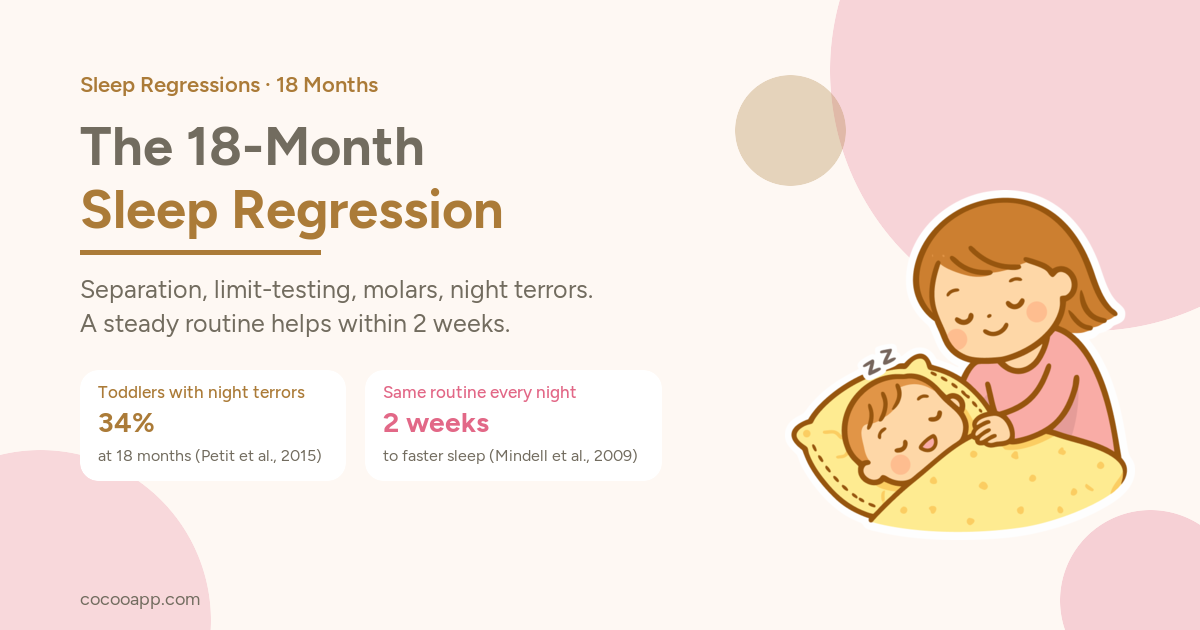
The 18-month sleep regression usually comes from one of four things: louder protest when you leave, a toddler testing the bedtime rules, molars, or night terrors, which are more common at 18 months than at any later age (Petit et al., 2015). A consistent bedtime routine improved sleep in toddlers this age within two weeks (Mindell et al., 2009).
So if your good sleeper is suddenly screaming at bedtime or calling for you at 2am, it's very likely a phase with a cause you can find. Here's how I'd work out which one, and what I'd do for the next two weeks.
If it's 2am right now
- Eyes open but they don't seem to see you? That may be a night terror. Don't wake them, just keep them safe.
- Calling for you and calms when you appear? Go in, use one short line (“It's sleep time, I'm here”), and leave.
- Don't start something new you'll have to undo, like bringing them to your bed for the first time.
- Fever, ear pulling or hard breathing? Treat it as sick and call your pediatrician.
Is the 18-month sleep regression real?
The 18-month sleep regression isn't a stage you'll find defined in sleep research. It's the name parents give to a stretch of worse sleep that lines up with a lot of change. Most toddlers are walking by now: healthy babies start walking alone anywhere from about 8 to 18 months (WHO Multicentre Growth Reference Study Group, 2006). Many are adding words fast: in one diary study, 13 of 18 toddlers had a burst of new words that lasted up to three months (Goldfield & Reznick, 1990).
You'll read that the word burst itself keeps toddlers awake. I haven't found a study that shows that, so I wouldn't plan around it. What I'd plan around are the things you can see and change at bedtime.
And our own data can't help much here. We only have a handful of toddlers with complete logs at 18 months, too few to report.
Which cause is it? What you see and what I'd try
| What you see | Most likely | What I'd try |
|---|---|---|
| Screams the moment you leave, calm as soon as you're back | Separation protest | Same short goodbye every night. Brief, boring check-ins at set times rather than staying until asleep. |
| One more book, one more drink, climbing out, "no" at every step | Testing the bedtime limits | Offer two small choices inside a fixed routine ("this pajama or that one"), then the same limit every night. |
| Drooling, chewing everything, rubbing a cheek, worse for a few days | Molars or canines | Ask your pediatrician about pain relief for bad nights. Keep the routine and the response the same. |
| Screaming 60 to 90 minutes after bed, eyes open but not seeing you, no memory next day | Night terror | Don't wake them. Keep them safe and wait it out. Look at naps and bedtime for overtiredness. |
| Long nap, then wide awake at bedtime for an hour | Nap ending too late | Wake them from the nap by mid-afternoon so there are 5 to 6 hours awake before bed. |
Why is my 18-month-old fighting bedtime?
An 18-month-old fights bedtime mostly because bedtime is where they practice two new things at once: knowing you're leaving, and knowing they can say no. Both are healthy. Neither means you need a new sleep plan every few nights.
What helps is making bedtime boringly predictable. In a study of 405 children, half of them toddlers aged 18 months to 3 years, families who followed the same short routine every night for two weeks saw their children fall asleep faster and wake less. The toddlers were also less likely to call out or get out of bed (Mindell et al., 2009).
A 2-week bedtime plan for an 18-month-old
- 1
Pick a bedtime and hold it
Same time every night, within about 15 minutes. If the nap was short or skipped, move it 30 minutes earlier.
- 2
Use the same three or four steps, in the same order
For example: bath, pajamas and teeth, one book, lights out. The study that tested this used a short routine of bath, massage and a quiet activity (Mindell et al., 2009).
- 3
Decide your response to protest before bedtime
Write it down: when you'll go in, what you'll say, how long you'll stay. Then do exactly that for every call that night.
- 4
Keep going for two full weeks
Judge it at the end of week 2, not after one bad night. Time to fall asleep is the number to watch.
If you want a structured method for the protest part, our gentle sleep training and sleep training methods guides cover the options. Most work in toddlers too: a review of 52 studies found 94% reported behavioral methods helped (Mindell et al., 2006).
Are molars or night terrors to blame?
Molars can be part of it. Upper first molars usually arrive between 13 and 19 months, and canines between 16 and 22 months (American Dental Association). In a study that followed 125 babies' symptoms through each new tooth, symptoms like drooling, gum rubbing and irritability clustered in the few days around a tooth coming through (Macknin et al., 2000). That study stopped at age 1, though, so it didn't include molars.
Night terrors look different. They usually happen 60 to 90 minutes after bedtime, your toddler seems awake but doesn't respond to you, and there's no memory of it the next morning. In a study of 1,940 children, 34% had sleep terrors at 18 months, the highest share at any age measured (Petit et al., 2015). Our night terrors guide covers what to do during one.
Should I drop the nap?
No. Fewer than 2.5% of children stop napping before age 2 (Staton et al., 2020), so a toddler fighting the nap at 18 months almost always still needs it. Instead, look at when it ends. A nap that runs late into the afternoon can push bedtime later. I'd aim for about 5 to 6 hours awake between the end of the nap and bedtime, and check our wake windows by age chart if you're unsure.
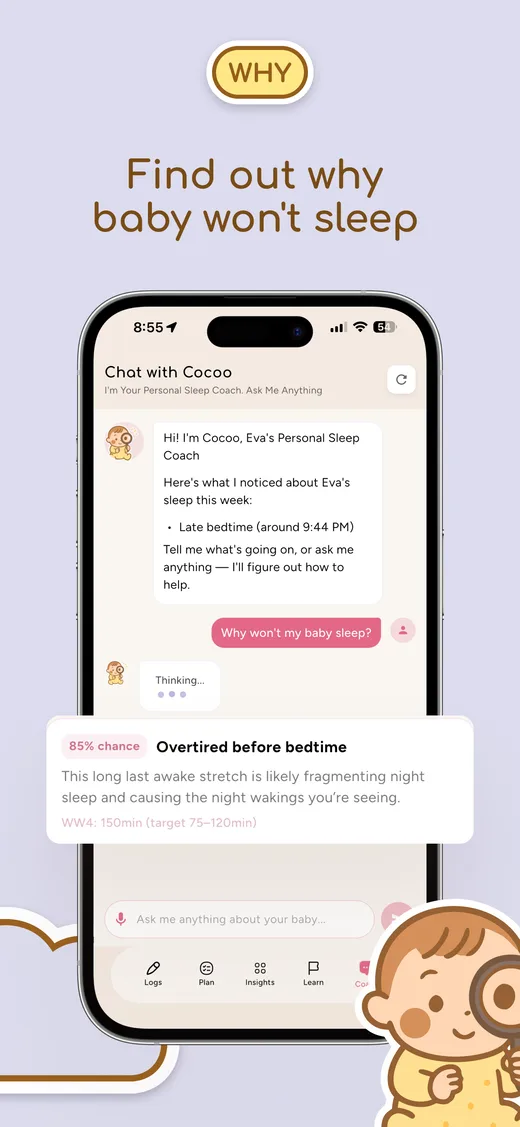
Logging two weeks of naps and bedtimes makes the pattern easier to see than memory does. Cocoo times naps and bedtime from your toddler's own logs, and it works from birth to age 5.
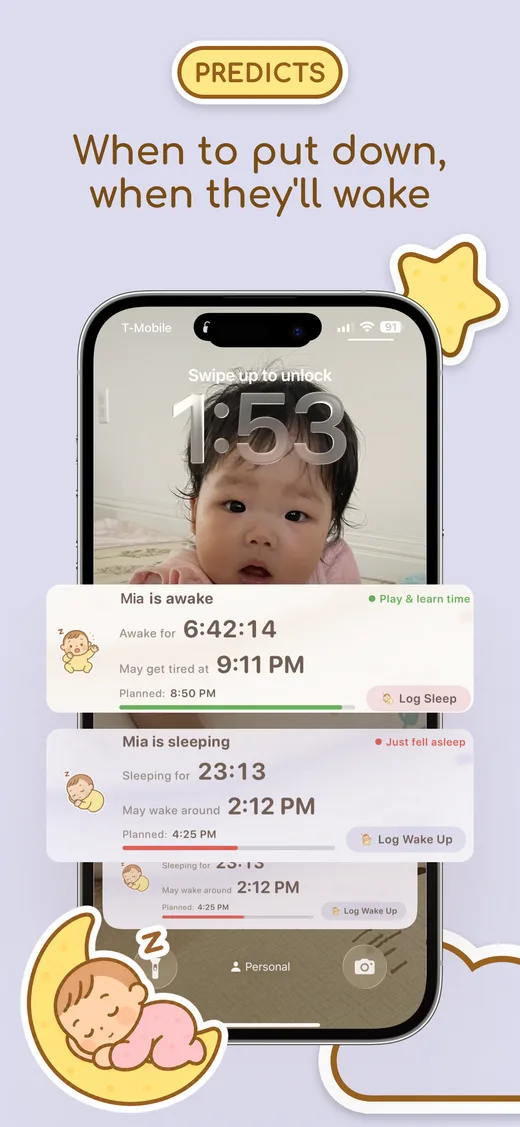
Not sure where bedtime should land after today's nap?Cocoo predicts when your toddler will be tired tonight from the nap they actually took, and plans bedtime around it.
When to call the pediatrician
Call if night waking comes with fever, ear pulling, vomiting, loud snoring or pauses in breathing, if night terrors happen several times a night or your toddler gets hurt, or if sleep hasn't improved after a few weeks of a steady routine. This post is general information, not medical advice.
Related questions
How long does the 18-month sleep regression last?
Usually a few weeks, depending on the cause. Molar pain tends to come and go over days. Bedtime protest can last as long as the response keeps changing. In a study of toddlers aged 18 months to 3 years, a consistent bedtime routine improved time to fall asleep and night wakings within two weeks (Mindell et al., 2009).
Is it OK to sleep train an 18-month-old?
Yes. Behavioral sleep methods have been studied in toddlers as well as babies. A review of 52 studies found 94% reported they worked (Mindell et al., 2006). At this age the routine and the limits around it matter more than which method you pick. Choose one you can repeat the same way every night.
Keep reading
Sources
American Dental Association. Primary tooth development (eruption chart). MouthHealthy.org.
Goldfield BA, Reznick JS. Early lexical acquisition: rate, content, and the vocabulary spurt. Journal of Child Language. 1990;17(1):171–183.
Macknin ML, Piedmonte M, Jacobs J, Skibinski C. Symptoms associated with infant teething: a prospective study. Pediatrics. 2000;105(4):747–752. PubMed
Mindell JA, Kuhn B, Lewin DS, Meltzer LJ, Sadeh A. Behavioral treatment of bedtime problems and night wakings in infants and young children. Sleep. 2006;29(10):1263–1276. PubMed
Mindell JA, Telofski LS, Wiegand B, Kurtz ES. A nightly bedtime routine: impact on sleep in young children and maternal mood. Sleep. 2009;32(5):599–606. PubMed
Petit D, Pennestri MH, Paquet J, et al. Childhood sleepwalking and sleep terrors: a longitudinal study of prevalence and familial aggregation. JAMA Pediatrics. 2015;169(7):653–658.
Staton S, Rankin PS, Harding M, et al. Many naps, one nap, none: A systematic review and meta-analysis of napping patterns in children 0–12 years. Sleep Medicine Reviews. 2020;50:101247.
WHO Multicentre Growth Reference Study Group. WHO Motor Development Study: windows of achievement for six gross motor development milestones. Acta Paediatrica Supplement. 2006;450:86–95. PubMed
Two weeks of bedtimes, side by side
Log bedtime and how long it takes to fall asleep in Cocoo, then compare week 2 with week 1.